
Storm Watching: Why Some of Us Feel Calmer When the Sky Gets Wild
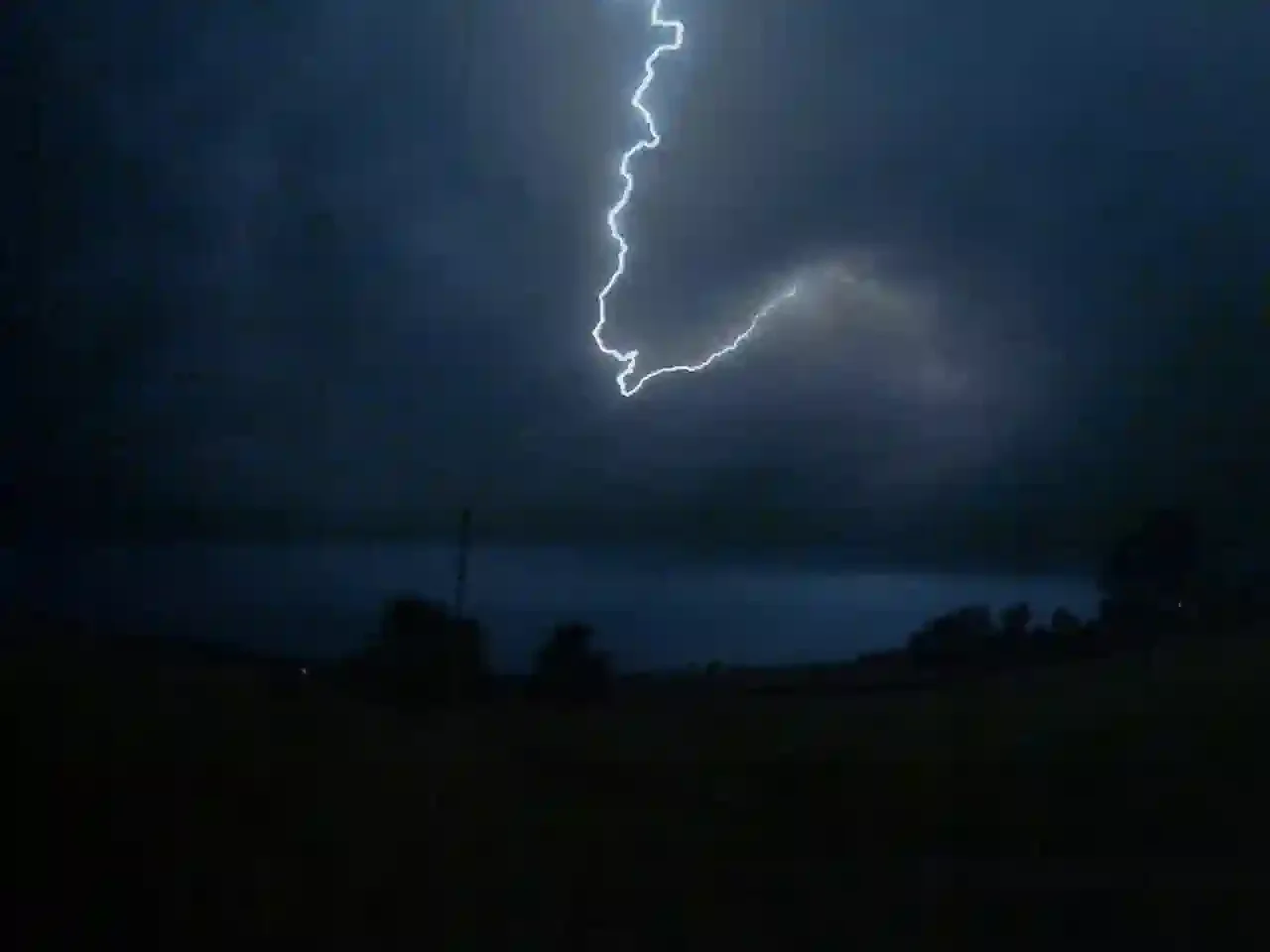
When storms bring joy.
Some find peace in an Ohio thunderstorm. Find out what it could say about you.
Not everybody dreads a storm rolling in. Some of us actually perk up a little. We snuggle up on the couch, read a book, go quiet in a good way, maybe step outside and watch the lightning show. All the while feeling something in our chest loosen instead of tighten.
If that's you, I don't think you're weird for it, I’m actually the same way. I think there's something real going on in your nervous system, and it's worth understanding.
Storms can be a "glimmer." In this field we talk a lot about triggers — the small things that tip us into stress or fear. Less talked about are glimmers: the small things that tip us the other direction, into a felt sense of safety or joy. These could be things like hearing your favorite song, a child’s laugh, a favorite sweater or a sweet treat. For a lot of people it’s a good storm— the low rumble of thunder, the smell of rain, the way the clouds light up with lightning and the sky changes.
Why a storm may be calming instead of alarming. I know, I know you might be thinking: “I just like storms! It’s not that deep”. And maybe, maybe not. But a few things could be going on:
Predictable intensity. A storm is big, sensory, and dramatic — but it's also familiar. You've been through plenty of them. Your body already implicitly knows how they’re going to work: it builds, it peaks, it passes. That predictability can actually be more regulating than a quiet day where you're bracing for something unknown.
Give up control. For many anxious souls a storm is something so vastly out of their control- they have no choice but to relax. A sense of something bigger than you. For many, it’s something spiritual or even religious. Such as “thunder is just angels bowling”, a reassurance given to me when I was younger.
Permission to slow down. A storm outside often means an "excuse" to stop — to sit still, dim the lights, not be productive for a minute. That forced pause can feel like relief, especially if your nervous system rarely gets permission to downshift otherwise.
Rhythmic, whole-body input. Thunder, steady rain, wind — these are rhythmic sounds, and rhythm tends to be soothing to the nervous system the same way a heartbeat or rocking motion is. It's sensory input the body can settle into.
Association. Sometimes it's simpler than any of that. A storm might just remind you, on some subconscious level, of a specific safe memory. A porch. A parent's voice. A blanket fort. The nervous system holds onto that pairing long after you've forgotten where it came from.
Why is this worth noticing? Glimmers matter because they're evidence of the good all around us. They are proof your nervous system already knows how to find peace, on its own, without being taught. The goal isn't to manufacture more storms. It's to get curious about what a storm is doing for you at that moment, so you can recognize the ingredients elsewhere: rhythm, permission to pause, predictable sensory input. Once you know what's actually soothing you, you can look for smaller versions of it on an ordinary day.
So if you catch yourself getting quietly happy about a storm rolling through Ohio this week, that's worth paying attention to, not explaining away. Your nervous system is telling you something about what safety feels like for you.
Curious what your own glimmers might be, or want support building more calm into your everyday? I'd love to talk. Reach out here.
