
Sometimes the day-to-day can just become a little too much. The next thing you know, your heart is racing, your thoughts are spinning and mentally- you are somewhere else. When anxiety begins to take over like that, it can be super difficult to just “snap out of it” or even tell yourself to chill out.
That's where grounding comes in. Grounding is a way of pulling your attention out of the worry spiral and back into the here and now, using what's right around you. It helps with one of my favorite phrases “Be where your feet are”. My go-to strategy for this is the 5-4-3-2-1 exercise. It's simple, it's free, and you can do it anywhere. The best part is this can be done without anyone even noticing or a fantastic tool to use with someone else.
How do you do the 5-4-3-2-1 grounding technique?
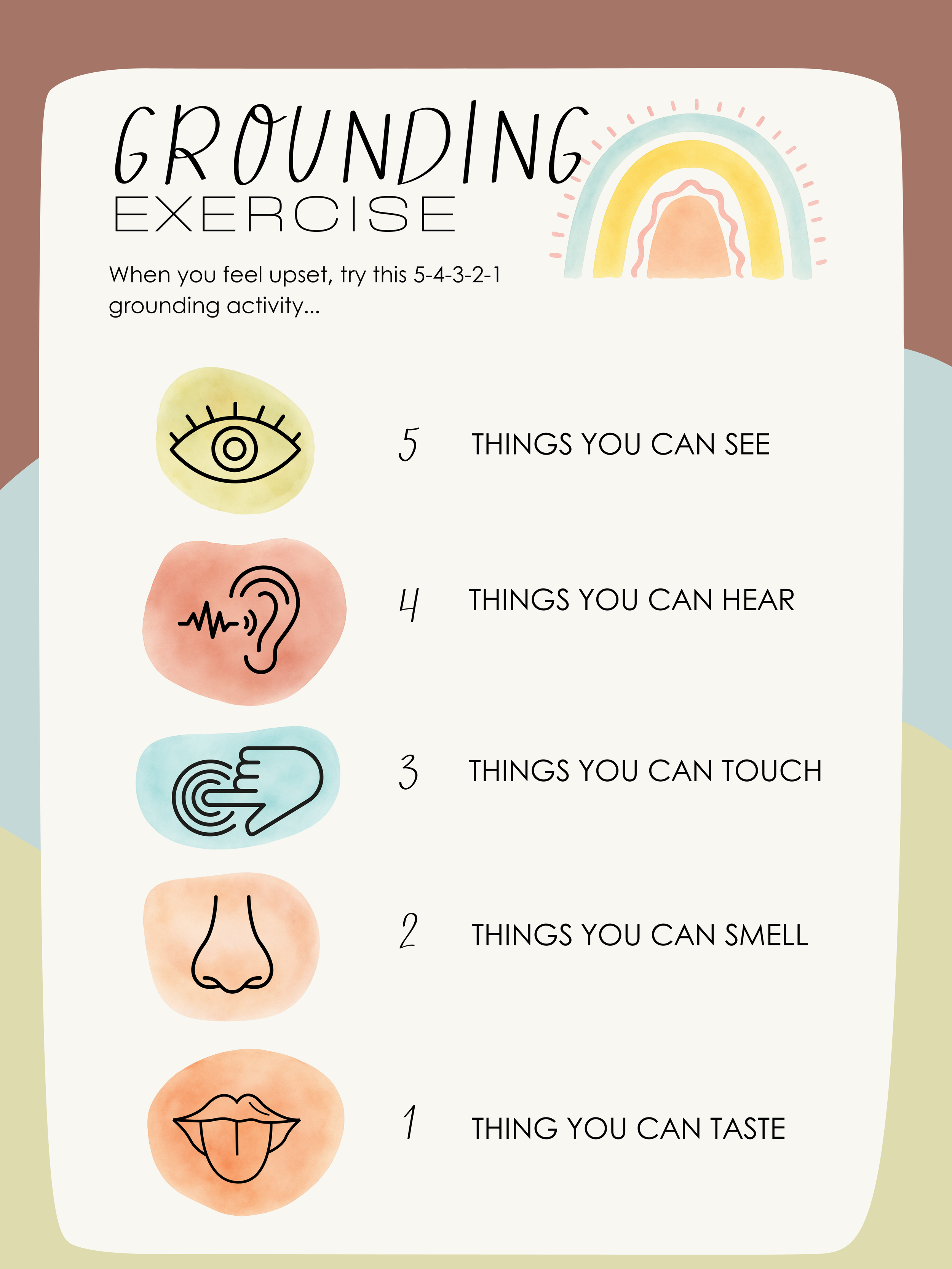
Wherever you are, slowly work your way through your five senses:
5 things you can see. Look around and name them, out loud or in your head. Ex: The color of the wall, a pencil, your water bottle.
4 things you can hear. Your own breathing, the hum of a fan, others talking or laughing.
3 things you can feel. Your feet on the floor. The fabric of your shirt. The chair underneath you.
2 things you can smell. Your coffee, your soap, the air around you. If nothing stands out, it's okay to move closer to something or just notice that the room smells "neutral."
1 thing you can taste. Toothpaste, a sip of water, or just the inside of your mouth. Disclaimer: This one can be a bit more difficult. I like to mix it up by identifying something I would like to taste or even use it as a moment of gratitude for some small part in your day.
Take your time with each one. The slower and more detailed you get, the better it works.
Why does it help for anxiety?
When you're anxious, your brain is usually stuck in the future ("what if...") or replaying the past. Your senses, on the other hand, can tell you about right now. Giving your brain a concrete, specific task also takes up some of the mental space anxiety was using, which can help your body start to regulate.
It won't make the anxiety disappear completely, and it isn't meant to. The goal is to bring the intensity down enough that you can think clearly again and decide what you need next.
How can you make grounding work better?
Practice when you're calm. Like any skill, it's easier to reach for in a hard moment if you've tried it a few times on an ordinary day.
Don't worry about doing it "right." If you can only find three things to see, that's fine. The point is noticing, not hitting a number.
Pair it with a slow breath. A longer exhale between each sense can help your body catch up with your mind.
Mix it up a bit. You can adapt this however your heart desires. Maybe search for items that are only your favorite color, that you enjoy, or find to be appealing.
Does the 5-4-3-2-1 technique work for kids?
Absolutely! Kids and teens can use it the same way adults do. For younger kids, try turning it into a game on the way to school or at bedtime. Many kids love the "I spy" feel of it, and practicing together when they're calm makes it easier for them to reach for when they're upset. It’s a fantastic way for everyone to work on their self-regulation skills.
When should you get help for anxiety?
Grounding is a great in-the-moment tool, but if you find yourself needing it every day, or anxiety keeps getting in the way of work, sleep, or relationships, that's a sign it might be time for more support. Therapy can help you understand what's driving the anxiety in the first place, not just manage it when it hits.
I work with adults (and teens) across Ohio who are navigating anxiety and negative thought spirals. All my sessions are telehealth, so you can meet from wherever feels comfortable. If anxiety has been running the show lately, I'd be glad to help. Learn more about adult anxiety therapy or therapy for teens.
